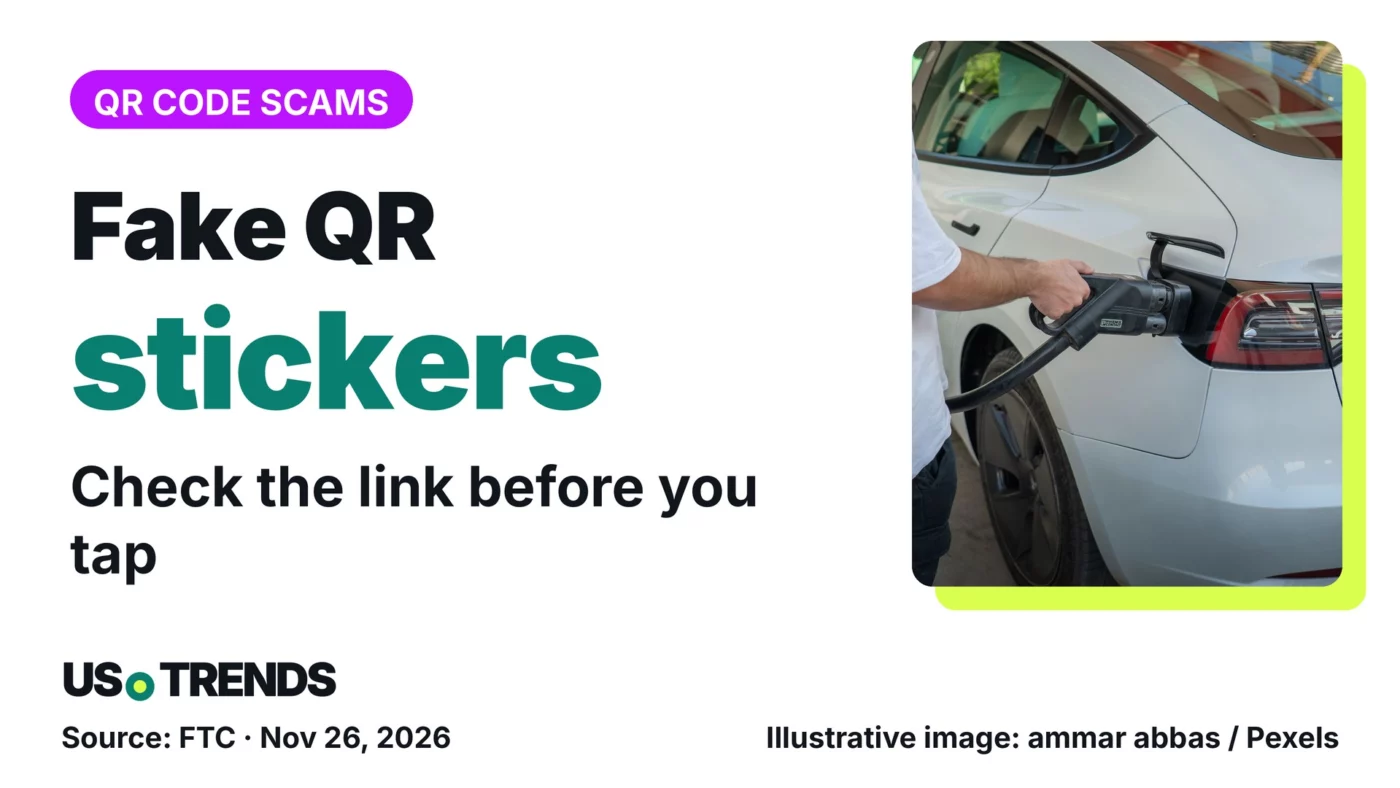
Scammers put their own codes over real ones; a link preview is the first check before anything opens.
Fraudsters cover legitimate QR codes on parking meters with their own, and scanning one can lead to a fake site that steals money, personal information, or both, the FTC warns.
The FTC consumer alert was published on September 3, 2026. It does not mention EV chargers. Applying the advice to charging stations is our reading, not an FTC finding.
Before you scan
- Check the link preview. Look for misspellings or swapped letters in the URL before you open it; many QR readers show the link first.
- Keep your phone secure by installing operating system and app updates.
- Use strong, unique passwords and multi-factor authentication on your online accounts.
If you scanned a suspicious code
- Do not contact the scammer. Reaching out through the fake site may lead to requests for money or sensitive information.
- Change your passwords, including on any account where you reused the same one.
- Review your credit card and bank statements for transactions you do not recognize.
Report the scam to the FTC at ReportFraud.ftc.gov.
Your view: How do you pay at parking meters and public charge points: app, card or QR code? Tell us in the comments.
Sources and date
- FTC: See a QR code parked somewhere? Don’t scan it…yet! (September 3, 2026)
As of: November 26, 2026
Transparency note: AI-assisted tools were used in researching, structuring and writing this article. The sources used are listed in the article. Publication takes place only after manual editorial approval.
Share this article
Read next
Your curiosity
Our next story
Bring your ideas for AI and digital media
Discover open positions Research
 ▶ Reel