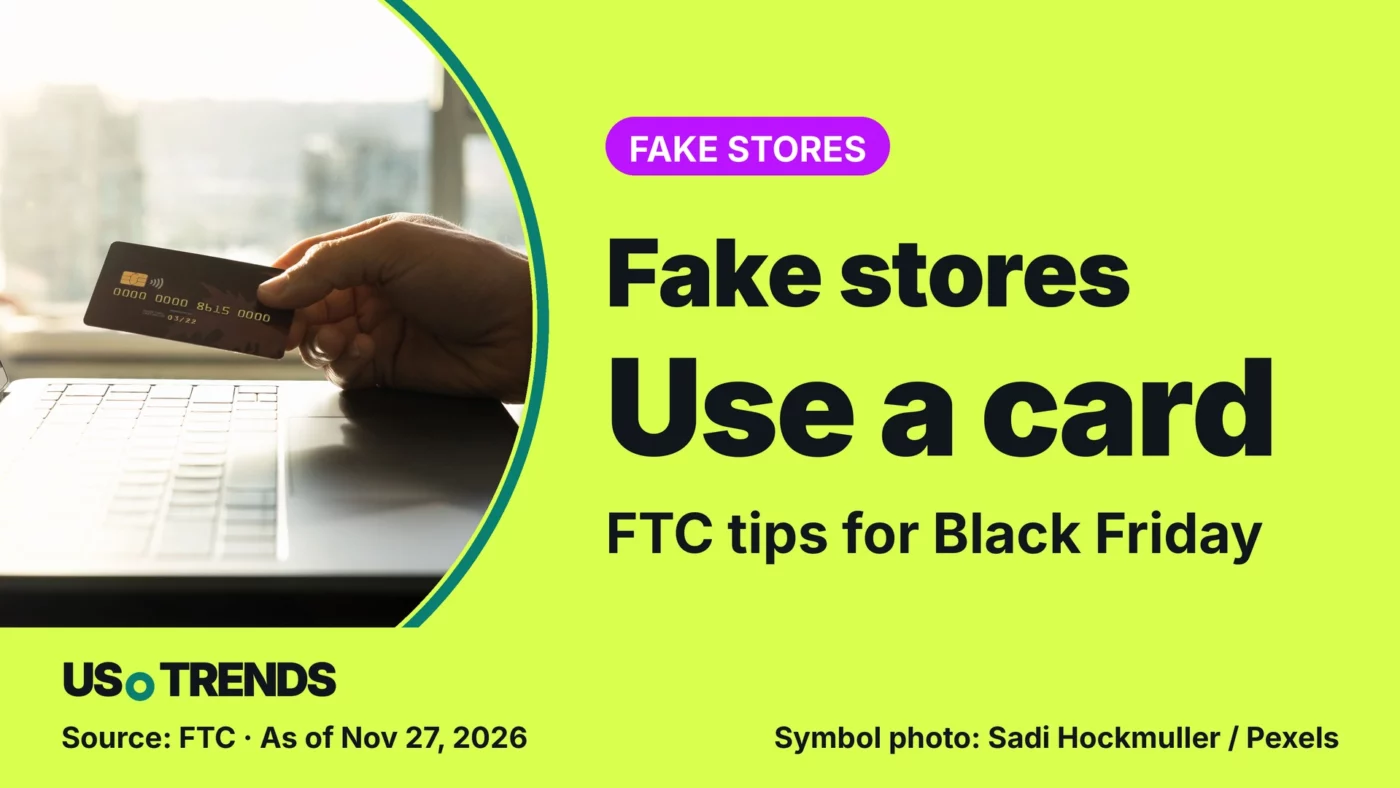
Scammers copy real brands and advertise unusually low prices. The FTC says how to check a seller and why a credit card gives you more options.
Key points
- The Federal Trade Commission (FTC) says scammers impersonate real companies and advertise brand-name products at “unusually low prices”.
- It advises paying by credit card when possible, because you can dispute charges for items you never received.
- A seller that insists on a gift card, wire transfer, payment app or cryptocurrency is “probably a scam”, according to the FTC.
- For a credit card billing error, your written notice must reach the issuer within 60 days after the first bill with the error was sent.
On Black Friday, Nov. 27, the biggest risk for online shoppers is a fake store that takes your money and sends nothing. The FTC advises checking the seller first and paying by credit card.
The FTC alert cited below dates from late November 2025, and we found no newer version for this season. The advice is general and applies to this year’s sales too.
How fake stores lure shoppers
According to the FTC, scammers impersonate real companies and advertise brand-name products at unusually low prices. Clicking the ad can lead to a fake website. There you may be sold a counterfeit, a product that looks nothing like the one in the ad, or nothing at all.
The FTC alert gives no figures on how many shoppers are affected, so we do not cite any.
How to check a seller
The FTC advises searching for the seller’s name and the website address together with words such as “review”, “complaint” or “scam” to see what others report. Keep your receipt and order confirmation number, because they help if you need to recover money from the seller.
Sellers must ship by the date they or their ad promise, or offer you a refund, says the FTC. Our article on the 30-day shipping rule explains what applies when no date is stated.
Pay by credit card if you can
With a credit card you can dispute charges if you were charged twice, billed for something you never received, or sent a wrong or damaged item, the FTC says. If a seller insists on a gift card, wire transfer, payment app or cryptocurrency, the agency calls it “probably a scam”.
For other payment options and their limits, see our article on Klarna buyer protection.
The 60-day rule for billing errors
The FTC’s page on disputing credit card charges describes the Fair Credit Billing Act. You must send a letter that reaches the card issuer within 60 days after the first bill with the error was sent, addressed to the billing-inquiries address rather than the payment address. The issuer must acknowledge it in writing within 30 days and resolve the dispute within 90 days.
- Counts as a billing error: unauthorized charges, a wrong amount or date, and items not delivered as agreed.
- Unauthorized charges: federal law limits your responsibility to $50.
- During the investigation: you may withhold the disputed amount but must pay the undisputed part of the bill.
If you disagree with the result, you can file a complaint with the Consumer Financial Protection Bureau and report the problem at ReportFraud.ftc.gov.
The German version of this story describes German law on price mistakes after payment. We have not checked how U.S. or state law treats them.
What you can do now
- Search the seller’s name with “review” or “scam” before you pay.
- Pay by credit card and avoid gift cards, wire transfers, payment apps and cryptocurrency.
- Save the receipt and order confirmation number.
- If a charge is wrong, send your written dispute within 60 days of the bill that shows it.
Three questions on fake stores
- How soon must your written billing-error notice reach the card issuer?
- Within 60 days after the first bill with the error was sent
- Within 7 days of ordering
- Within one year
Reveal answer
Within 60 days after the first bill with the error was sent · The FTC says the letter must reach the issuer within 60 days after the first bill with the error was sent.
- If a seller insists on a gift card for payment, the FTC says it is probably a scam.
Reveal answer
True · The FTC says a seller who insists on a gift card, wire transfer, payment app or cryptocurrency is probably a scam.
- What does the FTC suggest searching for together with the seller's name?
- Words like review, complaint or scam
- The seller's tax number
- The price in other currencies
Reveal answer
Words like review, complaint or scam · Searching the seller's name and website address with terms like review, complaint or scam shows what others report.
Frequently asked questions
How do I spot a fake online store?
The FTC says scammers impersonate real companies and advertise brand-name products at unusually low prices. Search the seller’s name and website address with words like review, complaint or scam.
Which payment methods does the FTC warn about?
A seller that insists on a gift card, wire transfer, payment app or cryptocurrency is probably a scam, according to the FTC.
How long do I have to dispute a credit card charge?
For a billing error, your written notice must reach the issuer within 60 days after the first bill with the error was sent. The issuer must acknowledge within 30 days and resolve within 90 days.
Where can I report a scam?
The FTC asks consumers to report suspected scams at ReportFraud.ftc.gov. You can also file a complaint with the Consumer Financial Protection Bureau.
Your view: Have you ever spotted a fake store before paying, and what gave it away? Share your experience in the comments.
Sources and date
- FTC: How to avoid an online shopping scam this holiday season (consumer alert, November 2025, accessed 27 November 2026)
- FTC: Disputing credit card charges (consumer guide, accessed 27 November 2026)
As of: Nov. 27, 2026
Transparency note: AI-assisted tools were used in researching, structuring and writing this article. The sources used are listed in the article. Publication takes place only after manual editorial approval.
Share this article
Read next
Your curiosity
Our next story
Bring your ideas for AI and digital media
Discover open positions Research
 ▶ Reel