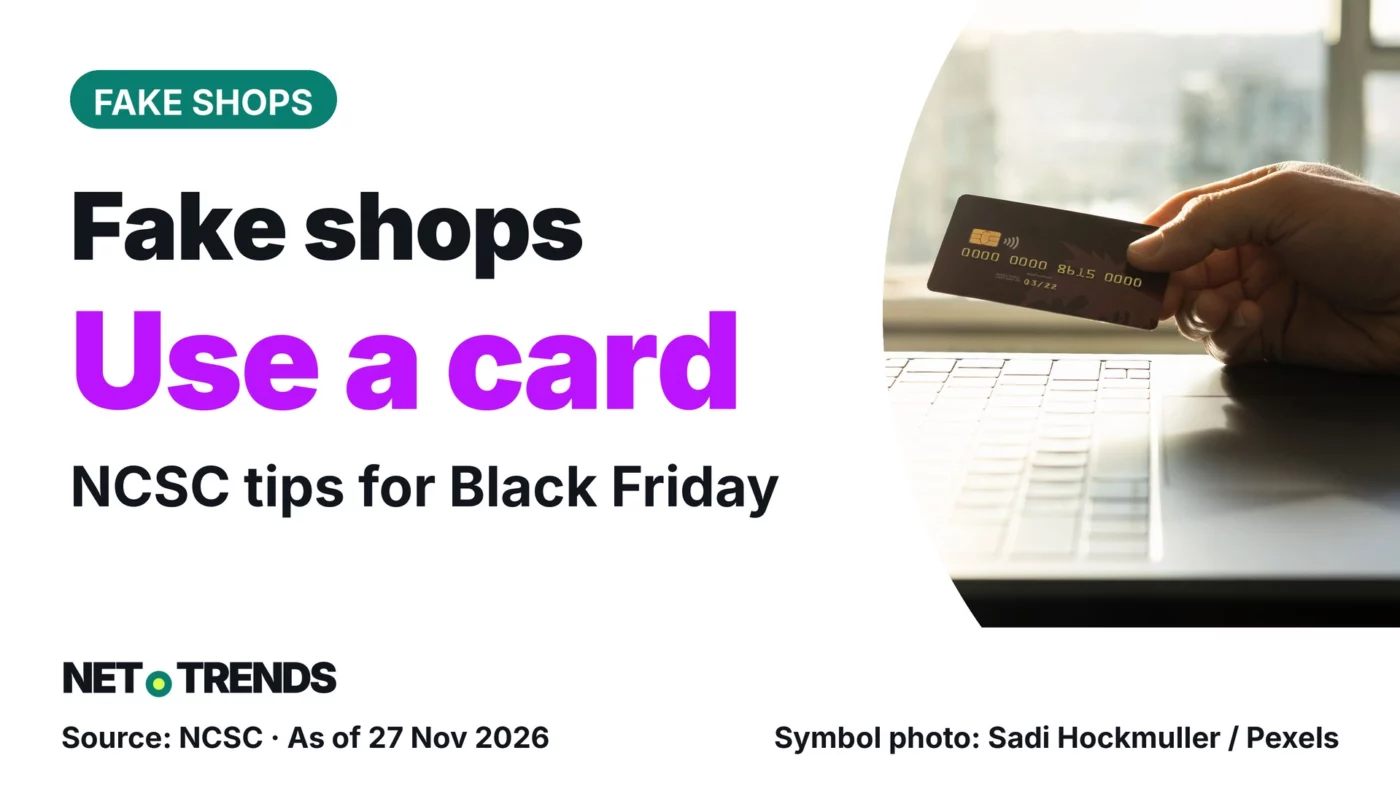
Fake shops copy real ones and pricing mistakes can undo an order. The NCSC and Citizens Advice say what to check and what protection you have.
Key points
- The National Cyber Security Centre (NCSC) advises paying by credit card where possible, because it “can provide more protection if anything goes wrong”, and avoiding bank transfers.
- Its figures cover the 2023 festive period: more than £11 million lost, £695 on average per victim.
- Citizens Advice says a company cannot usually cancel an order with a contract just because the price was wrong.
- Section 75 can make a card provider jointly liable for a single item costing more than £100 and up to £30,000.
On Black Friday, 27 November, fake shops and pricing mistakes are the two things that can cost you money after you click “pay”. The NCSC advises a credit card and a quick check of the seller.
The NCSC figures below come from its 2024 warning and cover November 2023 to January 2024, so they are not this year’s numbers. We found no newer UK total for this period. The advice stays relevant because the tricks repeat.
What the NCSC reported on losses
The NCSC said people in the UK reported losing over £11.5 million to online criminals between November 2023 and January 2024. Its summary says “over £11 million”, so the two figures differ slightly. The average loss per victim was £695, and the previous year’s total was £10.6 million.
Of the reports, 7,168 (43%) mentioned a social media platform, and online marketplaces appeared in 18.9%. Action Fraud data in the same release shows more than 16,000 reports of online shopping fraud over the previous festive period. People aged 30 to 39 made the most reports (23%).
The NCSC advice
The NCSC tells shoppers to stop, break contact and not click links if something feels wrong. It also warns about false urgency such as limited-time offers. Before you buy, check reviews on trusted review sites.
For important accounts, it recommends two-step verification, so a criminal who knows your password still cannot get in. It does not list a count of fake shops, and its release does not give reporting steps for victims.
Why a credit card helps
The NCSC advises avoiding bank transfers where possible and says a credit card “can provide more protection if anything goes wrong”. Section 75 of the Consumer Credit Act 1974 makes the card provider jointly liable with the supplier for a single item costing more than £100 and up to £30,000.
Whether a claim works depends on your case, so contact your card provider as soon as you spot a problem. For other payment routes, see our article on Klarna buyer protection.
Wrong price after you paid
Citizens Advice explains what happens if a shop advertised the wrong price. Online, whether you have a contract depends on the company’s terms. It says you have a contract once you have paid or once the item has been sent.
- With a contract: the company “can’t usually cancel your order”, even if it realises the price was wrong. It can cancel only if the mistake was genuine and honest and you should have noticed it.
- Without a contract: the company can cancel your order if it realises it gave you the wrong price.
- Overseas sellers: you may have to pay VAT, customs duty or delivery fees.
Citizens Advice suggests contacting its consumer service for help. If you think a shop is deliberately misleading people, you can report it to Trading Standards. Our article on late Black Friday deliveries covers the delivery rules.
The German version of this story describes German law on price mistakes. We have not checked how it compares with the UK.
What you can do now
- Search the shop’s name with “reviews” or “scam” and read the reviews on trusted sites before you pay.
- Avoid bank transfers and pay by credit card where possible.
- Keep your receipt, order confirmation and emails in case of a dispute.
- If a message feels wrong, stop, break contact and do not click any links.
Three questions on Black Friday scams
- Which payment method does the NCSC say can provide more protection?
- A credit card
- A bank transfer
- A gift card
Reveal answer
A credit card · The NCSC advises avoiding bank transfers where possible and says a credit card can provide more protection if anything goes wrong.
- With a contract, a company can usually cancel your order because the price was wrong.
Reveal answer
False · Citizens Advice says the company can't usually cancel, unless the mistake was genuine and honest and you should have noticed it.
- What was the average loss per victim in the NCSC figures for November 2023 to January 2024?
- £695
- £69
- £6,950
Reveal answer
£695 · The NCSC gives an average loss per victim of £695 for that period.
Frequently asked questions
Which payment method does the NCSC recommend?
The NCSC advises avoiding bank transfers where possible and says a credit card can provide more protection if anything goes wrong.
Can a shop cancel my order after I paid because of a wrong price?
Citizens Advice says a company with whom you have a contract can’t usually cancel, unless the mistake was genuine and honest and you should have noticed it.
When do I have a contract with an online shop?
Citizens Advice says you have a contract once you have paid or once the item has been sent, depending on the company’s terms.
Who can I contact about a misleading shop?
Citizens Advice suggests its consumer service for help and Trading Standards if you think a shop is deliberately misleading people.
Your view: Have you ever spotted a fake shop before paying, and what gave it away? Share your experience in the comments.
Sources and date
- NCSC: Black Friday warning: figures reveal rising losses to scams (agency release, 18 November 2024, accessed 27 November 2026)
- Citizens Advice: If something is advertised at the wrong price (consumer guide, accessed 27 November 2026)
- legislation.gov.uk: Consumer Credit Act 1974, section 75 (statute)
As of: 27 November 2026
Transparency note: AI-assisted tools were used in researching, structuring and writing this article. The sources used are listed in the article. Publication takes place only after manual editorial approval.
Share this article
Read next
Your curiosity
Our next story
Bring your ideas for AI and digital media
Discover open positions Research
 ▶ Reel