Interest on new personal loans in the UK climbed for three months running to June 2026, Bank of England figures show, pushing up the cost of car finance
Key points
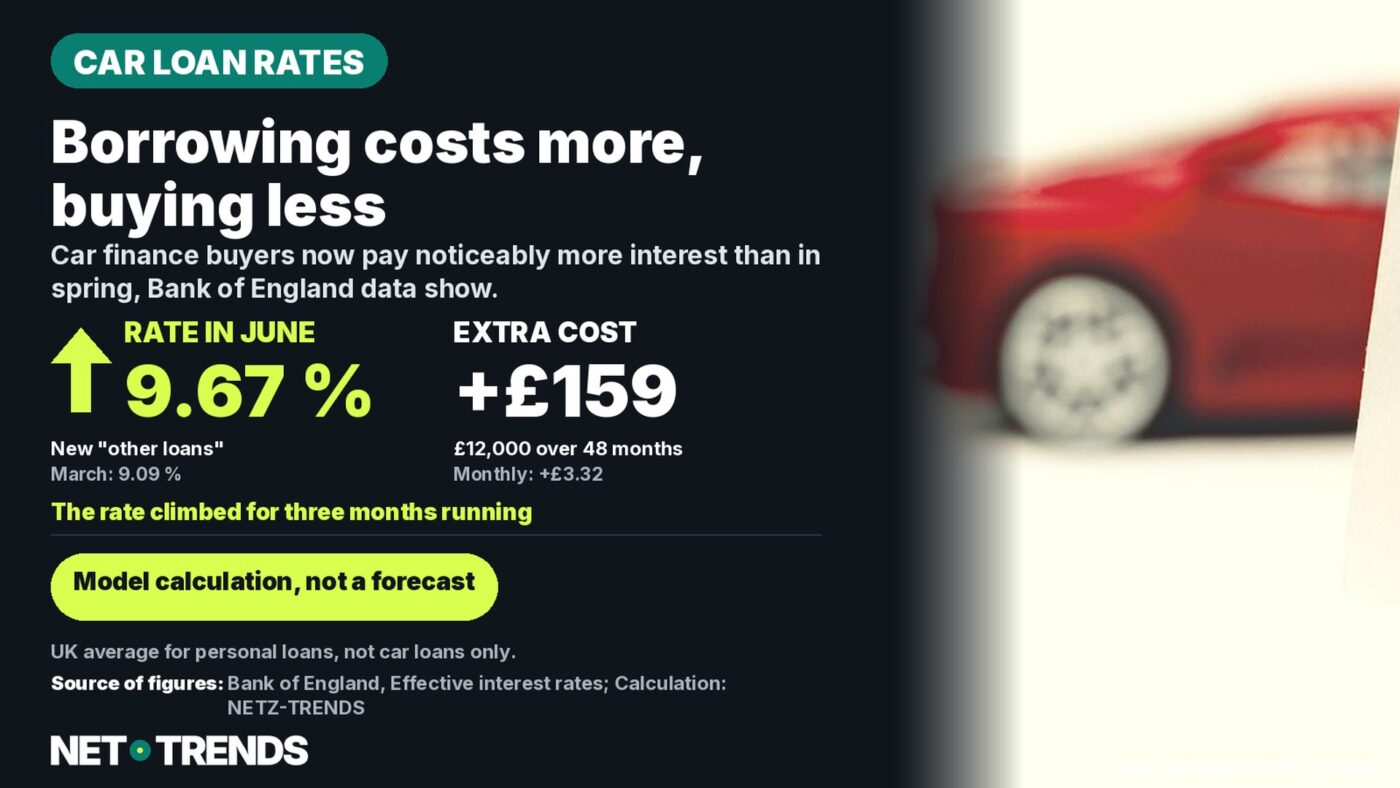
- The Bank of England’s effective interest rate on new “other loans” to individuals – the category covering most unsecured personal loans, including many used to buy cars – reached 9.67% in June 2026, up from 9.09% in March.
- The rate rose every month from March to June 2026: 9.09%, 9.53%, 9.66%, then 9.67%.
- On a representative £12,000 loan over 48 months, the rise since March adds roughly £159 in total interest, or about £3.32 a month.
Anyone financing a car on credit in the UK is now paying noticeably more interest than in early spring. Bank of England data show the average rate on new personal loans climbed to 9.67% in June 2026, from 9.09% in March.
The figures come from the Bank of England’s monthly Effective interest rates release, published 29 July 2026. The Bank does not publish a rate specifically for car loans; “other loans” is the closest available category, and it also includes loans not used to buy a vehicle. Many UK car buyers instead use hire purchase (HP) or personal contract purchase (PCP) deals arranged through a dealer, which are not captured in this series either – so the figures below describe the general cost of borrowing, not every car-finance route.
Still, a rising personal-loan rate is a useful signal: it is one of the most widely used ways British households finance a car bought outright rather than through a dealer scheme, and it moves broadly in line with the wider cost of consumer credit.
What the Bank of England figures show
The Bank of England published its latest effective interest rates data on 29 July 2026. For June 2026, the average rate on new “other loans” to individuals – new business, not the back book of existing loans – stood at 9.67%, essentially flat on May’s 9.66% but well above March’s 9.09%.
The Bank’s own table shows the rate rising every month in the second quarter: 9.09% in March, 9.53% in April, 9.66% in May, and 9.67% in June. Over the three months from March to June, that is a rise of 58 basis points.
As in Germany, where the Bundesbank’s broader consumer-credit rate rose to 7.92% in August 2026, the UK data cover new business only – loans actually taken out in that month – not the stock of loans already running.
What it means for car buyers
Unsecured personal loans remain one of the main ways UK households pay for a car bought outright, alongside dealer-arranged HP and PCP finance, which the Financial Conduct Authority (FCA) regulates separately and which the Bank of England’s series does not cover. For buyers comparing a bank loan against a dealer finance offer, a rising personal-loan benchmark is a reminder to check the representative APR on any offer carefully, not just the headline monthly payment.
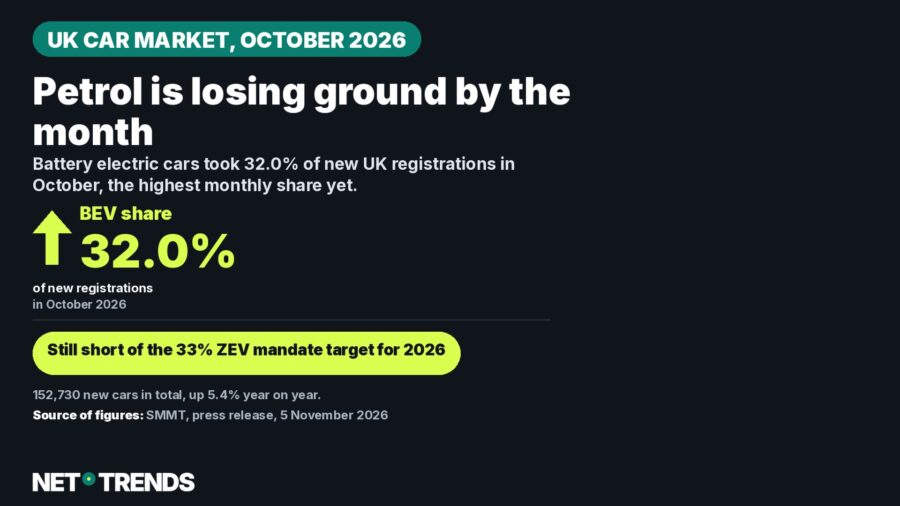
The UK’s new-car market has also been shifting towards electric vehicles, which reached a record 32% of the market in October 2026 – and electric cars are typically more expensive to finance than comparable petrol models, making the cost of borrowing even more relevant for buyers weighing their options.
The rate, month by month
The table below summarises the three most recent months in the Bank of England’s release:
| Month | Rate, new business |
|---|---|
| March 2026 | 9.09 % |
| April 2026 | 9.53 % |
| May 2026 | 9.66 % |
| June 2026 | 9.67 % |
Source: Bank of England, Effective interest rates, release of 29 July 2026 (category: other loans to individuals, new business). Later revisions by the Bank of England are possible, as with any monthly series.
The steepest single-month jump was between March and April, when the rate rose by 44 basis points. Since then the increase has slowed sharply, with May and June essentially flat.
What the rise costs in practice
To make the basis-point changes concrete, the editorial team modelled a representative £12,000 personal loan over 48 months, once at the March 2026 rate and once at the June 2026 rate.
Model calculation: £12,000 loan over 48 months
- At 9.09% (March 2026): monthly payment around £299.13, total repayment around £14,358, of which around £2,358 is interest.
- At 9.67% (June 2026): monthly payment around £302.45, total repayment around £14,518, of which around £2,518 is interest.
- Difference from the rate rise alone: around £3.32 more per month, around £159 more interest over the full term.
Net Trends calculation based on the Bank of England’s effective interest rates, as a standard repayment loan. Model calculation, not a forecast: actual offers depend on credit score, deposit, security and lender, and will vary.
On a larger loan, for a new rather than used car, the same rate rise would cost proportionally more in absolute terms.
What to check before borrowing
The average market rate is outside any individual buyer’s control, but the cost of a specific offer is not.
Checklist: comparing car finance
- Always compare the representative APR, not just the advertised “from” rate or the monthly payment alone.
- Weigh a bank personal loan against dealer HP or PCP finance – balloon payments and mileage limits on PCP deals change the real cost.
- A longer term lowers the monthly payment but increases the total interest paid over the life of the loan.
- Check whether early repayment or overpayments are allowed, and whether they carry a fee.
- Get more than one quote, including from your own bank or building society, not only the dealer’s in-house finance partner.
None of this replaces reading the small print on a specific offer – the Bank of England’s figures show only the market average, not the rate any individual lender will actually offer a given customer.
Are you planning to finance a car in the coming months, and how are you dealing with higher borrowing costs? Let us know in the comments.
Frequently asked questions
Does the Bank of England track car loans specifically?
No. The “other loans” category in the Bank of England’s effective interest rates release covers personal loans to individuals generally, with no separate line for vehicle finance. Many UK car buyers also use dealer-arranged HP or PCP finance, which is not covered by this series at all.
How much have rates risen since March 2026?
From 9.09% in March 2026 to 9.67% in June 2026 – a rise of 58 basis points over three months, according to the Bank of England’s effective interest rates release of 29 July 2026.
What does “new business” mean in this statistic?
It means loans actually taken out in that month, not the average rate across all personal loans currently being repaid. The Bank of England publishes this series monthly.
When does the Bank of England publish the next figures?
The effective interest rates release appears monthly, typically around four to five weeks after the end of the reference month. Figures for later months were not yet available when this article was researched.
Sources and status
- Bank of England: Effective interest rates, release of 29 July 2026 (reference month: June 2026)
- Deutsche Bundesbank: MFI-Zinsstatistik, press release of 1 October 2026 (in German), for the German comparison figure
Research and data as of: 6 November 2026.
Transparency note: AI-assisted tools were used in researching, structuring and writing this article. The sources used are listed in the article. Publication takes place only after manual editorial approval. Country edition based on an article from Net Trends, researched for the United Kingdom.
Share this article