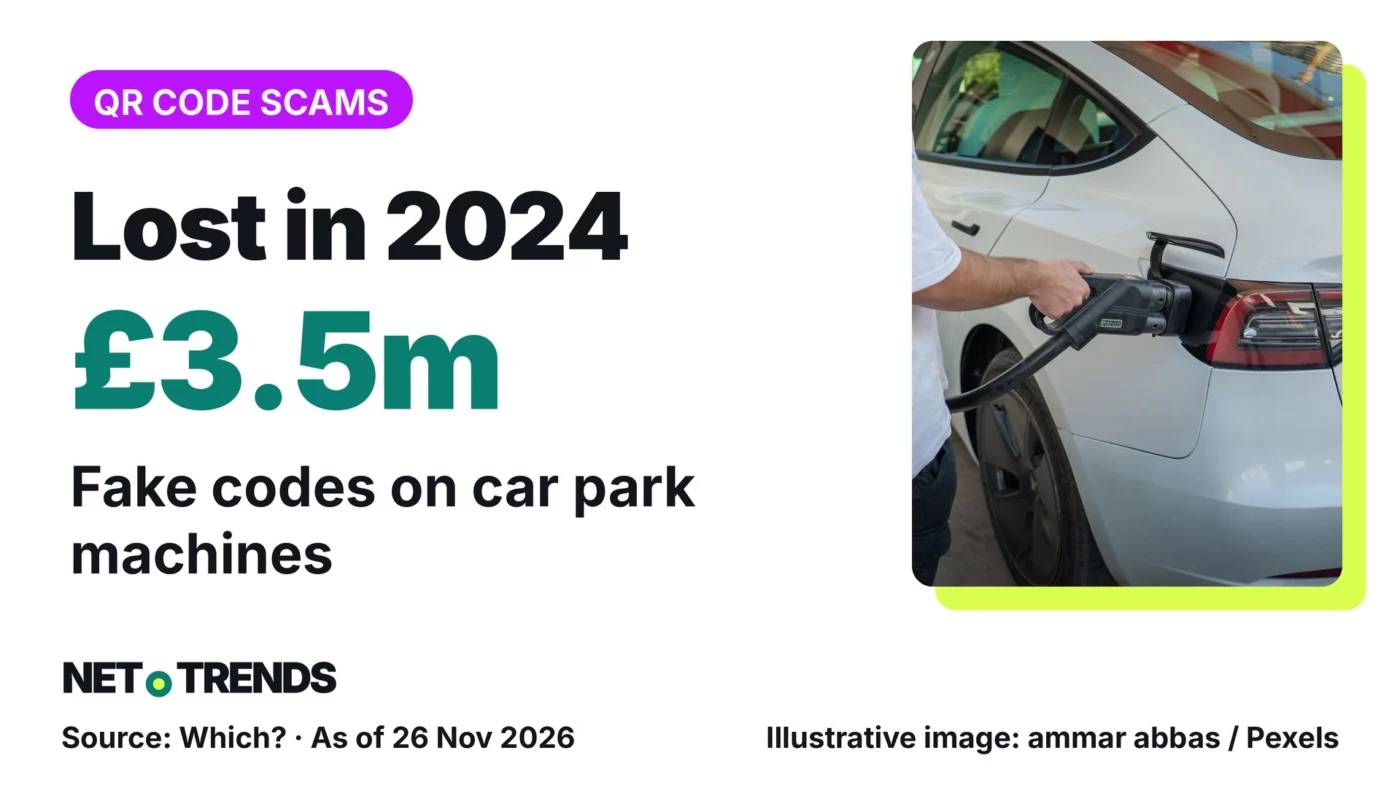
Fake codes turn up most often on car park payment machines; the same checks apply to any code stuck on a public pay point.
Action Fraud reported £3.5m lost to QR code scams in 2024, according to Which?. Fake codes are most commonly found in car parks, usually as stickers.
Which? published its warning on 25 June 2025. It describes stickers impersonating the parking operator RingGo that led to a site collecting personal and financial details. Trading Standards teams in Southend-on-Sea, Aberdeen City and Argyll and Bute also warned of fake codes, and the councils said they do not use QR codes for parking payments.
Which? does not single out electric vehicle chargers. Applying its advice there is our reading, not a finding from the report.
What to check before you scan
- Look for tampering, such as a code stuck over another. If unsure, type the website address in manually.
- Check the previewed web address matches what you expected before you open it.
- Avoid scanning codes in public places such as car parks, and look for another way to pay.
- Skip third-party scanner apps and use your phone’s built-in camera.
- Do not scan codes in emails, which can hide phishing links.
If you have lost money
Call your bank straight away, using the number on your bank card. Report the scam to Action Fraud, or call 101 in Scotland.
Your view: How do you pay at public car parks and charge points: app, card or QR code? Tell us in the comments.
Sources and date
As of: 26 November 2026
Transparency note: AI-assisted tools were used in researching, structuring and writing this article. The sources used are listed in the article. Publication takes place only after manual editorial approval.
Share this article
Read next


Your curiosity
Our next story
Bring your ideas for AI and digital media
Discover open positions Research
 ▶ Reel