Organised crime, criminal organisations – The Italian police are slowly beginning to tackle organised rip deal crime. According to estimates, international criminal organisations controlled from Italy have stolen hundreds of millions of euros through rip deals over the past 30 years, above all in Germany, Austria, Switzerland, the Netherlands and many other countries. As early as 2003, the German Federal Criminal Police Office (Bundeskriminalamt, BKA) warned in its “Annual Report on Economic Crime 2002” (Jahresbericht Wirtschaftskriminalität 2002, page 158 ff.) about this type of mafia movement and set up a special investigation team. Since then, however, thousands more rip deals have been committed in Germany, Austria, Switzerland and many other European countries, often with traumatic and financially ruinous consequences for the victims. Now, at least in Italy, things are starting to move.
The Italian police have arrested no fewer than two rip deal kings in Milan: Nenad Jovanovic and the German-Romanian Dzani Di Giammarco. Jovanovic is said to have been wanted internationally since 2007, but was never extradited. According to media reports, he is said to have been arrested in the meantime in 2017 or 2018, as he had been, among other things, the mastermind behind the theft of artworks worth 26 million euros, which he stole from members of the Jewish community of Milan.
However, he was apparently released again later – possibly as part of a deal under which the works by Rubens and Renoir would be returned. The arrest warrant at the time had been issued by Milan-area judge Dott.ssa Silvia Pansini of the competent Tribunale di Monza, i.e. the competent court in Monza in the Milan metropolitan area of Lombardy (northern Italy). Now, in addition to the renewed arrest, the seizure of assets worth millions belonging to Jovanovic also appears to have been ordered, several Italian media outlets reported.
Rip deals became internationally famous because the founder and internet star of the German internet group UNISTER (Ab-in-den-urlaub.de, Fluege.de, Reisen.de, Travel24.com AG; at its peak 2,000 employees and 2 billion euros in brokered travel sales), Thomas Wagner, was swindled out of 1.5 million euros by a rip deal gang in Venice in 2016 (Netz-trends reported). The crime was set up in Germany, with routes leading from Leipzig via Lower Saxony to North Rhine-Westphalia. The organised crime perpetrators operated under the alias “Levy Vass“. So far, the only person convicted in the case is the loan brokerage fraudster Wilfried Schwätter, who was sentenced by the Leipzig Regional Court (Landgericht Leipzig) to just under four years in prison.
After the rip deal against Wagner, he crashed in a private plane over Slovenia at the age of only 38, together with three fellow passengers, including a UNISTER co-founder (Oliver Schilling). The circumstances remain unexplained to this day. Shortly afterwards, the surviving shareholders took the company into insolvency. A large part of the UNISTER travel segment had to be sold off cheaply – a figure of 80 million euros has been mentioned. Traces of the rip deal against Thomas Wagner also lead to Milan. The Dresden Public Prosecutor General’s Office (Generalstaatsanwaltschaft Dresden) has so far not been particularly successful in its investigation to convict the main perpetrator.
No wonder: within four years, the Public Prosecutor General’s Office of Saxony (Generalstaatsanwaltschaft Sachsen) passed the case on to four different public prosecutors. At present, “group leader” Ute Schmerler-Kreuzer is said to be handling the matter. The prosecutor originally in charge, public prosecutor Dr. Dirk Reuter of the controversial Integrated Investigation Unit Saxony (Integrierte Ermittlungseinheit Sachsen, INES), was withdrawn and is now leading the “electronic case file (E-Akte)” project for the Saxon Ministry of Justice.
A rip deal is a form of advance-payment fraud: the victims are lured abroad and are usually promised that their goods will be bought at a premium of around 20%.
Sometimes bitcoins worth 100,000 euros are swindled, sometimes real estate
Sometimes it is real estate, at other times bitcoins worth 100,000 euros or Ripple are obtained by fraud. Gold bars, antiques, jewellery, companies or horses are also popular. But the “deal” only goes ahead once the victim makes a down payment – often supposedly to obtain an insurance policy from a notary for the deal, or for another exchange transaction.
The hub of rip deals is Italy, and there especially Milan, Rome and Venice. But neighbouring countries such as Slovenia and Croatia are also part of it. In Italy, the stronghold of rip deal set-ups, the police watched for decades and did little. But slowly things are starting to move.
The two kings of criminal organisations involved in rip deals who have now been arrested in Italy are both said to be members of the international Roma people. Members of the sister group, the Sinti, are rather less involved in rip deals, an Italian public prosecutor confirmed to Netz-trends.
Because of their centuries-old past as a travelling people, members of the Roma ethnic group are often multilingual: many speak, for example, Romanian, Croatian, Italian and German, and some also Albanian, French, Greek or Hebrew. This makes cross-border organised crime easier, as many police officers are not multilingual. However, most Roma living in Europe are perfectly ordinary fellow citizens.
On individual Roma clans as groups of perpetrators, the German Federal Criminal Police Office (BKA) already wrote the following in 2003 in its “Annual Report on Economic Crime 2002” (pages 158, 159; download here –  ):
“The internationally operating perpetrators, predominantly members of the Sinti and Roma communities originating from Italy or Yugoslavia, regularly have relevant experience in this area of crime. Their internal structure results in clear chains of command and in territorial allocations that are recognisable in relation to other groups.”
Rip deal king Nenad Jovanovic arrested in Milan
On 14 May 2020, the Italian news portal “fivedabliu.it” reported under the headline: “Milan, king of rip deal fraudsters arrested. The illegal treasure includes diamonds and paintings by Rubens and Renoir” (in Italian: “Milano, arrestato il re dei truffatori. Il tesoro illegale comprende diamanti e dipinti di Rubens e Renoir“). The article states:
“Assets worth more than two million euros seized from the king of rip deal fraudsters by the Milan police. Milan – Following a thorough investigation into his assets carried out by officers of the anti-crime division (Divisione Anticrimine Milano), the police chief of Milan (Questore) ordered an anti-mafia measure against Nenad Jovanovic (46), a repeat offender of Croatian origin who specialises in rip deal frauds.”
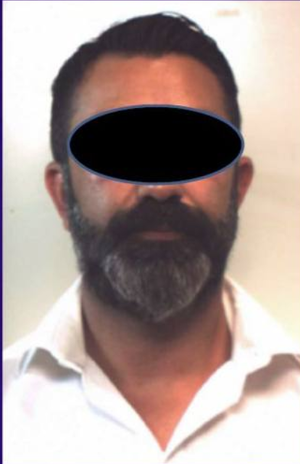
Note from Netz-trends: There are said to have been conflicting statements about Jovanovic’s nationality at the time of his arrest – on the one hand it was said that he was Serbian. Elsewhere, however, a possibly forged Croatian diplomatic passport is said to have been found.
Unfortunately, your browser cannot display embedded frames:
You can access the embedded page via the following
link:
Jovanovic’s mega-villa in Lombardy (northern Italy). This is where the rip deal crime king lives in pomp and luxury on stolen money. The estate is said to have been seized together with several apartments and cars. On the front door of one of his apartments, a police officer stuck a notice with the words “Property seized pursuant to Legislative Decree 159/2011” (Immobile sottoposto a sequestro ai sensi del D.L. 159/2011).
The fivedabliu.it article continues: “The ‘rip deal’ is a fraudulent exchange transaction in which the fraudsters, by promising a favourable exchange, take advantage to extort large sums of money from their victims. The term is a combination of the two English words ‘to rip’ and ‘deal’.
It is precisely in this type of crime that Jovanovic’s particular skill has emerged: he has presented himself sometimes as a wealthy art dealer, sometimes as a major property developer and even as a diplomat, and has managed time and again to defraud his victims of millions of euros.
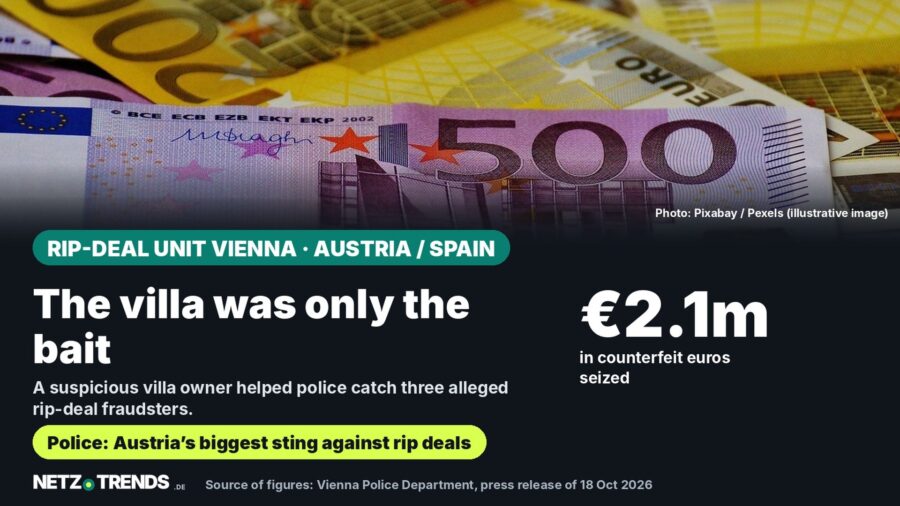
The most recent episode in chronological order took place in December 2019, when Jovanovic, posing as a wealthy buyer, took possession of a large diamond worth 3.1 million euros in a hotel lobby and paid with cash in 200-euro notes, which were of course counterfeit.”
Unfortunately, your browser cannot display embedded frames:
You can access the embedded page via the following
link:
This second video from the Italian police shows a smaller secondary apartment belonging to Jovanovic, which has now been seized. The Jovanovic rip deal in the footage at the end of the video is a scene in a well-known luxury hotel in Milan.
The Italian news portal fivedabliu.it continues: “Over the years, Jovanovic maintained a very high standard of living, with designer clothes, jewellery and big cars, such as a Ferrari 360 Modena Spider [Netz-trends editorial note: new prices range from 128,200 to 165,000 euros] and an Audi A6 [Netz-trends editorial note: new prices start at 46,877 euros]. He also acquired these cars to make himself credible in his false identity as a businessman or wealthy art collector.
The seizure carried out by the anti-crime division of the Milan State Police (Divisione Anticrimine della Polizia di Stato Milano) exceeds two million euros and includes a large apartment in Trezzano sul Naviglio [a municipality in the Milan metropolitan area], another apartment in Sedriano [a municipality in the Milan metropolitan area], a Mercedes AMG [Netz-trends note: new prices start at around 115,430 euros] and diamond jewellery. Investigators are also assessing the fraudster’s bank holdings.
His criminal career began in 2002, when he concluded the purchase and sale of an apartment in Austria worth 500,000 euros, handing over 90,000 in cash as a down payment, which later turned out to be counterfeit notes; since 2007 he has been wanted by Interpol (International Criminal Police Organization) for similar rip deal frauds, which were also carried out in Germany and Switzerland under the pseudonym Claudio Moro.
A striking episode took place two years ago in Milan, when Jovanovic posed as a rabbi of the Jewish community of Milan and managed to obtain two important works:
Rubens and Renoir stolen from Jewish community
‘The Holy Family’ by Peter Paul Rubens and ‘Girl in the Meadow’ by Pierre-Auguste Renoir, worth 26 million euros. He had led the sellers to believe that they were on the premises of an alleged consulate, then he left the paintings in a room and made them disappear. The works of art were recovered in a nomad camp (campo nomadi; also referred to as “Gipsy Italia”) in northern Italy.” [Netz-trends editorial note: In Italy, the term nomads usually refers to Sinti and Roma; according to numerous police authorities, Sinti are generally not involved in rip deals, whereas Roma are almost exclusively involved].
The Italian newspaper Corriere della Sera described the theft of the Rubens and Renoir paintings worth 26 million euros on 12 June 2018 as follows:
“But the absolute protagonist is him, the self-proclaimed ‘diplomat rabbi’ Samuel Abraham Lewy Graham, who identified himself with an [Netz-trends note: alleged but perfectly forged] ‘Israeli passport’. Born Nenad Jovanovic, 44, a Croat from Trezzano sul Naviglio with previous convictions…, was considered the material perpetrator of the theft of the ‘Holy Family’, an oil on wood by the Flemish painter Peter Paul Rubens, and of another canvas of immense value: ‘Girls on the Lawn’, a painting by Pierre-Auguste Renoir. Now in prison on the orders of preliminary investigations judge (giudice per le indagini preliminari) Silvia Pansini, whose order also covered the brothers Rocco and Francesco C., aged 52 and 49 and of Calabrian origin, and placed G. under house arrest.“
The Serbian newspaper kurir.rs also wrote about the case:
“Police arrested five people, including a Croat. This is Nenad Jovanović (44), reports Corriere della Sera. Jovanovic had an Israeli passport and introduced himself as the rabbi and Israeli diplomat Samuel Abraham Levi Graham. He is believed to have been the organiser of the entire operation. The scene of the crime was an alleged ‘Albanian honorary consulate’ in Brianza, about 45 minutes’ drive from Milan…
The seller brought two paintings locked in wooden crates, and the buyers were [allegedly] ‘Rabbi Jovanovic and another person’, the Italian police explained. They asked the seller to check whether the works were originals. Then they took photos of him and ‘the rabbi then carries out an incredible action that not even James Bond would be ashamed of’.
He opened the door of the residence with a remote control and ran to the truck where his accomplices were waiting for him. He jumped into the vehicle and disappeared in front of the astonished seller [with his original paintings worth 26 million euros]. They tried to catch him, but without success.
Nenad Jovanovic and his accomplices were eventually arrested, but the police were [initially] unable to find the stolen paintings.”
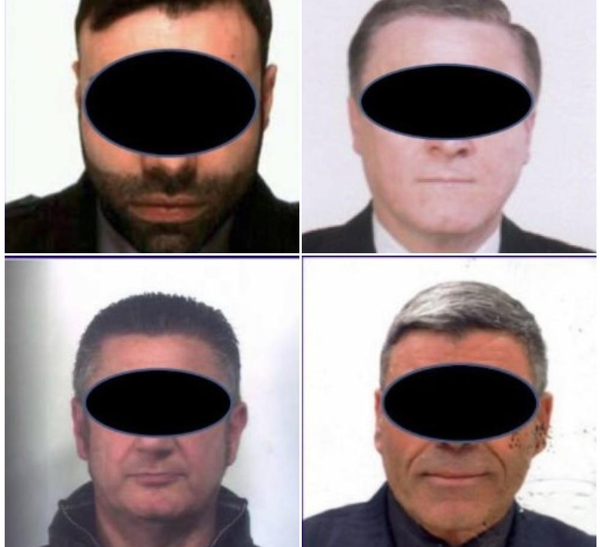
The Jovanovic crime syndicate is also active in Canada and fell into the hands of the police in 2014
The name Jovanovic has also been known in Canada since 2014. Canadian journalist Félix Séguin reported on 1 October 2014 in the Journal de Montréal (journaldemontreal.com) that Bosko Djordjevic and Sacha Jovanovic had been arrested in connection with a real estate rip deal.
Likewise on tvanouvelles.ca, where completely different photos of Sacha Jovanovich can be seen. Here, too, it almost looks as if two different people had been photographed, which is not the case.
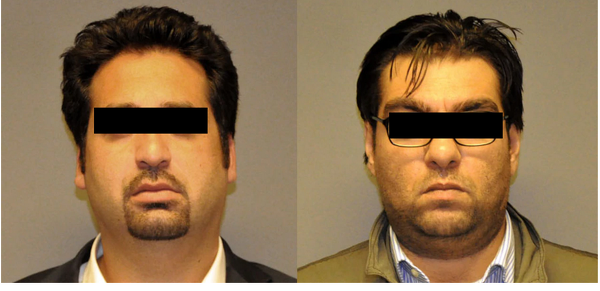
The article states: “Two alleged fraudsters involved in a real estate rip deal scam were arrested as they were preparing to rob a contractor in the car park of a shopping centre in Montreal... Sacha Jovanovich and Bosco Djordjevic, two 35-year-old French nationals, were arrested on Monday evening in the car park of the Galeries d’Anjou as they left a restaurant by officers of the Sûreté du Québec (the provincial police of Quebec, SQ), including members of its tactical team... According to our information, one of the two accused posed as a certain Alexandre Ackermann, a supposedly wealthy European businessman… “
The Journal de Montréal also reports:
“In May [2014], our investigative bureau announced the arrival of this new type of real estate fraud in Quebec. We had been in contact with three entrepreneurs who had all told a similar story. All three had put their business up for sale on specialised websites. The owner of a farming business, who wishes to remain anonymous, said he had handed over a suitcase containing 100,000 US dollars in cash to individuals posing as investors.
According to Captain Richard Gauthier of the economic crime division of the SQ, these arrests should send a message to the public. They said they had been contacted by a man posing as Alexandre Ackermann. The man describes himself as coming from a wealthy Belgian family of Israeli origin that is willing to invest in Canada. Ackermann allegedly met them in the lobbies of major hotels in Montreal. On Monday evening, he allegedly tried to swap a case of genuine Canadian banknotes for a case of counterfeit banknotes with a Quebec businessman as part of a financial transaction.”
Jovanovic crime syndicate also stole Evita Perón’s jewels worth ten million euros in Spain
More than ten years ago, the Jovanovic clan, in the person of Zoran Jovanovic, was already involved in the theft of jewels worth around 10 million euros belonging to the Argentine politician Evita Perón (Partido Peronista Femenino, Female Peronist Party). In a deal with the public prosecutor’s office, the clan brought some of the jewels back to light and received a reduced sentence in return. It seems that the criminal clan has succeeded in doing this again in connection with the 26-million-euro paintings. Perhaps, however, it has now overstepped the mark with the theft of a 3-million-euro diamond.
Whether members of the Jovanovic crime syndicate were also involved in the rip deal against UNISTER founder Thomas Wagner is still unclear. However, an insider told us: “I do not rule it out.” So far, though, there has been no evidence. There are numerous parallels: the rip deal mafia that robbed Wagner also claimed to come from Israel (an Israeli diamond dealer and discreet billionaire); in addition, the name “Levy” (or Lewy) was also used, as in the 26-million-euro art theft. More at: “Rip Deal – When 10 million euros of Evita Perón’s jewels fell into the hands of Roma and Sinti (in German)“
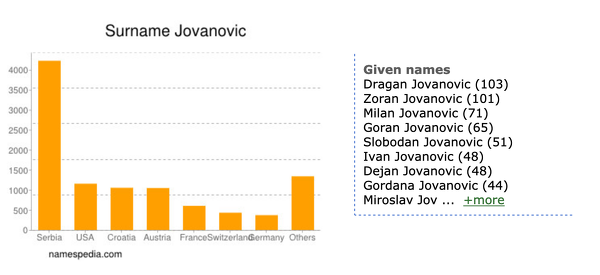
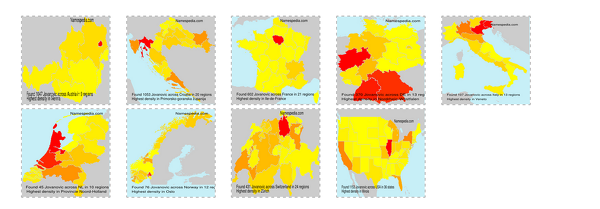
Want to know where the name Jovanovic comes from? Then take a look at the website namespedia.com, which specialises in onomastics (the study of names) with world maps and regional maps. The name Jovanovic is most common in Serbia (around 4,000 times), followed by the USA (around 1,100 times), Croatia (around 1,050 times), Austria (around 1,000), France (around 600), Switzerland (around 450) and Germany (around 400; mainly in Bavaria, Baden-Württemberg, North Rhine-Westphalia). It can be assumed that most of the Jovanovics who appear in rip deals are somehow connected.
The mega-villa and the Mercedes: the 1-million-euro treasure of the fraudster with 22 names”
Italian journalist Carmine Ranieri Guarino reported on another arrest of a Milan rip deal king in September 2019 on milanotoday.it under the headline “The mega-villa and the Mercedes: the 1-million-euro treasure of the fraudster with 22 names”:
“He has never filed a tax return in his life. He and his family have practically never appeared in the records of the tax offices, and for the Italian state they formally do not exist. Unfortunately, however, he appeared again and again in the records of the Carabinieri (Italy’s military police force) and the police, and according to investigators this is how he built up his fortune and his treasure.
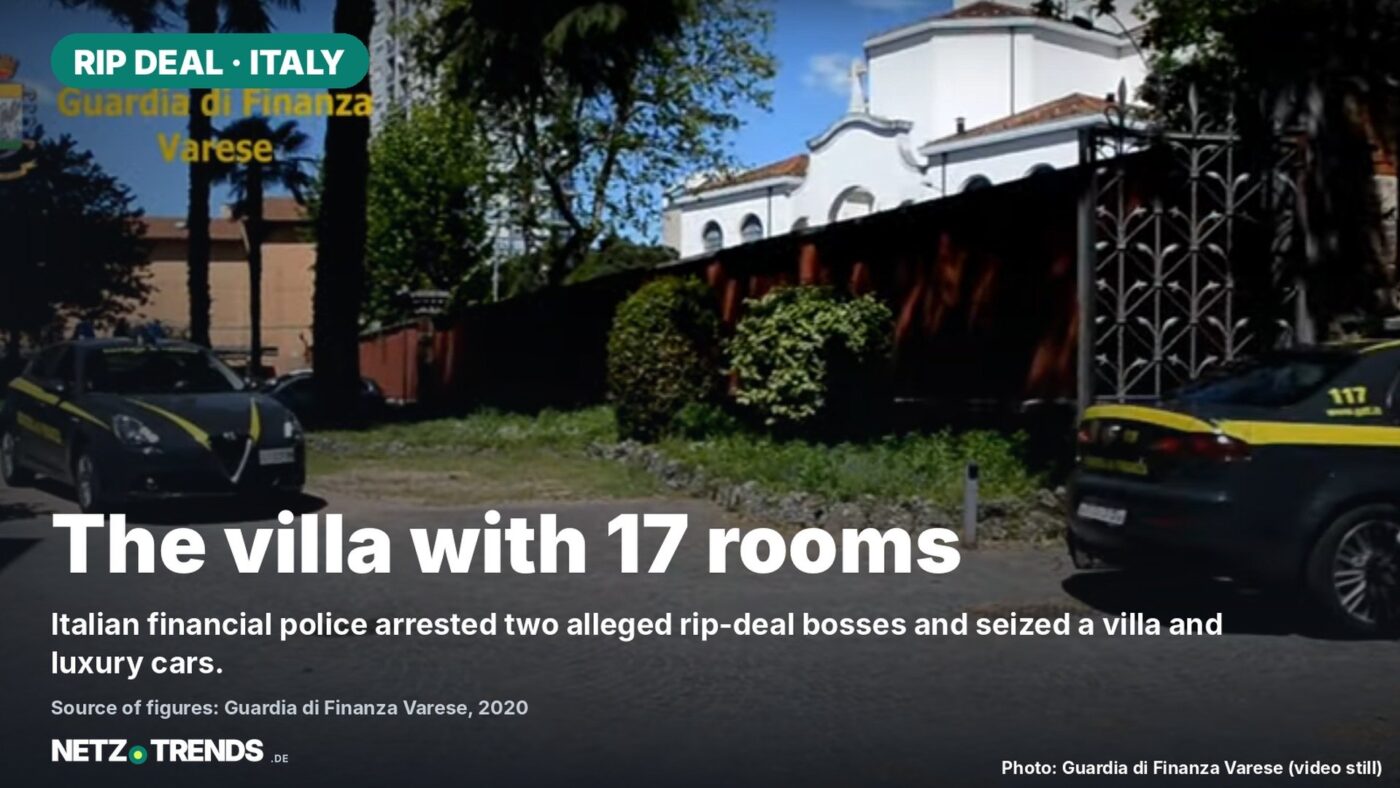
Officers of the anti-crime division of the Milan police headquarters (“Divisione Anticrimine della Questura di Milano“), headed by Dr. Alessandra Simone, seized assets worth more than one million euros from Dzani Di Giammarco, a 38-year-old Romanian who was born in Germany and lives in Trezzano sul Naviglio. He is the “king” of the rip deal.
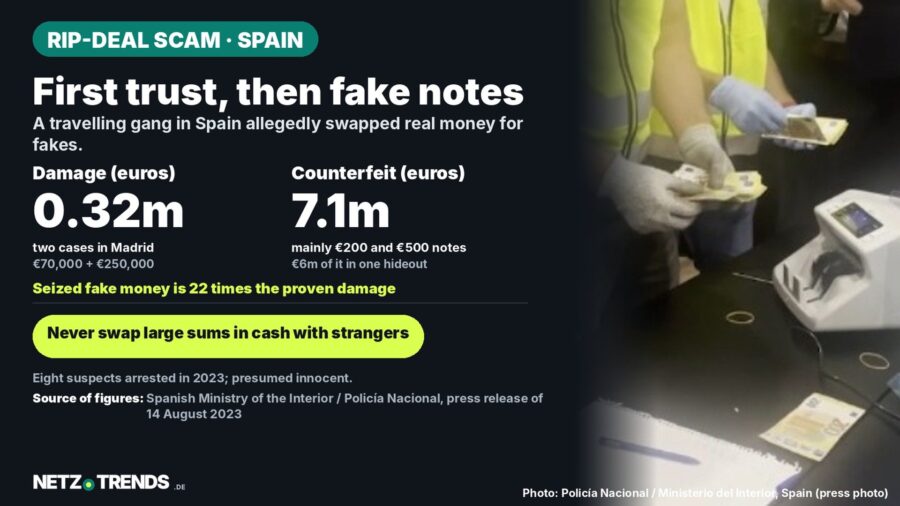
Dzani’s is the story of a robber and thief before he became a fraudster. His criminal career, which includes thirteen arrests, actually began with a robbery when he was still a minor, and then continued with a “specialisation” in the “rip deal”, the type of fraud that consists of a fraudulent exchange operation, in which the criminal promises the victim a particularly advantageous rate and then palms off counterfeit money.
Spanish entrepreneurs cheated out of 610,000 euros
Following the usual script, made up of meetings in the lobbies of the best hotels and trips in luxury cars, he managed in 2010 to obtain 610,000 euros from two Spanish entrepreneurs. In 2012 he did the same with another Spanish citizen: pretending to be interested in buying a house in Portugal, he took 40,000 euros from him at an appointment at McDonald’s on Viale Certosa in Milan, using the usual money-exchange technique.
Five years later he struck again: the same fake exchange deal, another Spanish victim and a haul of 20,000 euros. And not only rip deals. Dzani’s criminal record is long, with many arrests: in 1994 for theft, in 1996 for another theft, in the same year two more arrests for burglary, the following year for drugs, two years later for theft, in 2008 for resisting an officer and causing damage after a fight outside a nightclub in Milan, where he apparently approached some of his victims.
And again: in 2010 in handcuffs for the theft of computers – worth 63,000 euros – from a company in Trezzano sul Naviglio and in 2014 for stealing skis worth 500 euros from a hotel in Cervinia (Aosta Valley, northern Italy). Then, on 24 December 2018, one of his best-known hits: the maxi-theft – in which his whole family took part – from a Huawei manager, his neighbour.
The whole family joined in
That evening, Dzani and his wife, together with two sons and two cousins, had robbed the Chinese man’s apartment and taken everything to their villa. There, officers of the crime division have now collected all the evidence against the 38-year-old. He was registered by the Italian law enforcement authorities under 22 aliases.
Despite the various names used during his career – clearly to hamper investigations – the police have so far been able to reconstruct perfectly many of the crimes committed by the man and to establish that despite his official ownership situation, he had lived for years in a mega-villa with seventeen rooms. He drove around in a latest-model Mercedes and a new Fiat 500.”
The Jovanovic clan is also active in Berlin
Members of the Jovanovic clan are wanted internationally. According to datacomm.ch, they also include Sinisa Jovanovic. The portal writes that “29-year-old Sinisa Jovanovic, who used the aliases ‘Pisani’, ‘Lichten’ and ‘Liechen'”, is wanted, and goes on to state:
“‘Rip deal’ fraudsters wanted with photographs: search for so-called ‘rip deal’ fraudsters. By publishing the photographs of six internationally operating so-called ‘rip deal’ fraudsters, the Berlin State Criminal Police Office (Landeskriminalamt Berlin, LKA) is searching for the men, who are wanted on arrest warrants, and is at the same time looking for further victims and witnesses.
Those wanted are suspected of looking for victims by evaluating, for example, the real estate sections of the daily press, but also specialist magazines, in search of people who are offering property, yachts, high-quality vehicles, but also jewellery and works of art for sale, or who are looking for investors.
Contact is made with the advertisers through intermediaries, and an interest in buying or investing is feigned. In the course of the negotiations it is then explained, for example… that payment is to be made in cash. In this context, the need to exchange a foreign currency is given as a reason, and the future victim is promised a commission for the currency exchange.
Under this cover story, the victim is persuaded to travel with large sums of money to other cities, frequently to Milan and Turin in Italy, but also to France or Belgium. There, during the “currency exchange”, he is handed counterfeit money, often Swiss franc notes. In some cases, the victims have also been robbed of the cash they brought with them.
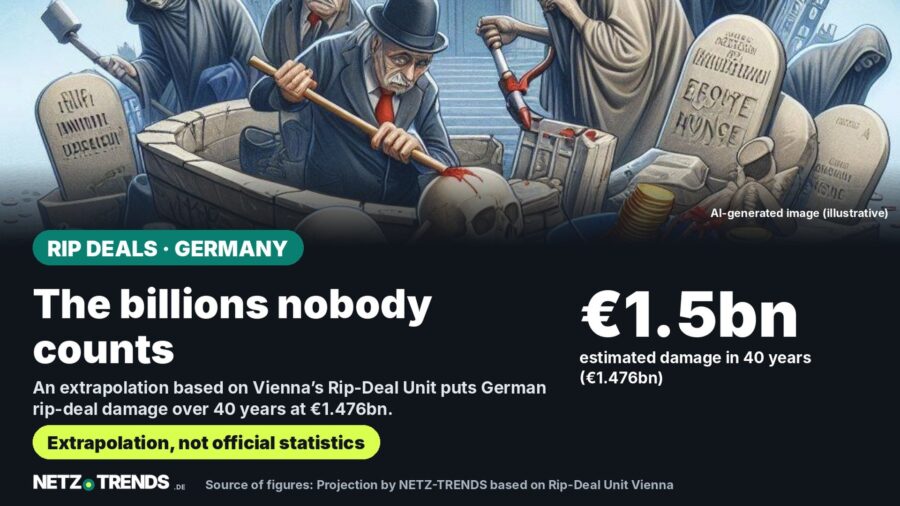
In total, around 2,000 offences, including attempted set-ups, have become known in Germany since 2000, causing damage of approximately 65 million euros.
Since it can be assumed that, because of the ‘undeclared money problem’, many victims have not reported the crime, a high number of unreported cases is assumed.”
Note from Netz-trends: The number of rip deals in Germany alone and the amount of damage are likely to be considerably higher than stated here. As early as 2003, the Federal Criminal Police Office (BKA), referring to statistics from the Bavarian State Criminal Police Office (Bayerisches Landeskriminalamt), put the number of rip deals per year at over 800.
German Federal Criminal Police Office – report on types of rip deals and countries 2002
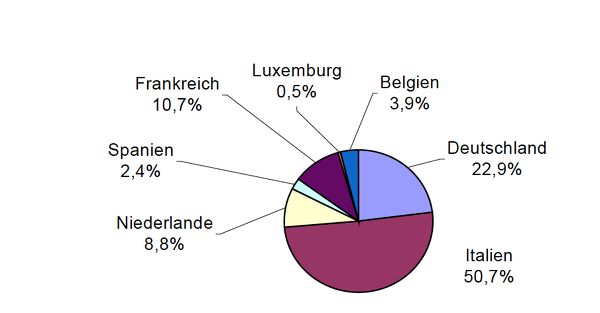
The German Federal Criminal Police Office (BKA) wrote on this in 2003: “For two years, the Bavarian State Criminal Police Office has been compiling a collection of around 800 initiated and completed cases. The total recorded damage for 250 completed offences amounts to approximately 44 million euros. Of these, 196 were committed abroad. What stands out is the focus on Italy, with around 51%. The number of cases said to have been committed in Germany is around 23%. A random check of the cases with Germany given as the crime scene showed that in 50% of the cases the recording police stations had reported Germany (the victim’s place of residence) as a substitute crime scene. The actual crime scene was abroad.
For the German federal states of Brandenburg, Bremen, Saarland and Saxony-Anhalt, no completed offences were recorded during the survey period. In Bremen, Saarland and Brandenburg only a few set-ups are known. The number of set-ups that have become known varies greatly from federal state to federal state and is therefore not very meaningful.
Furthermore, these figures depend heavily on the reporting behaviour of the police stations. The number of unreported offences is likely to be many times higher; a large dark field of unreported crime must be assumed. Victims often want to multiply ‘undeclared money’ profitably, regard the money as lost anyway because it disappeared abroad, and are also ashamed of their recklessness and gullibility. This has a negative effect on reporting behaviour. The countries where the crimes were committed are:
Italy: 50.7%
Germany: 22.9%
Luxembourg: 0.5%
Belgium: 3.9%
France: 10.7%
Spain: 2.4%
Netherlands: 8.8%
(Source: Annual Report on Economic Crime 2002, page 159, BKA Germany; Missing: Switzerland, Dubai.)
A sharp increase in set-ups was also recorded in the “watercraft” segment. As a general rule, the perpetrators now contact sellers of high-quality goods of all kinds:
Gemstones/precious metals: 3%
Antiques: 1%
Motor vehicles: 10%
Other: 8%
Real estate: 57%
Foreign exchange: 10%
Loan brokerage: 9%
Watercraft: 2%
Large-scale proceedings involving telecommunications surveillance (Telekommunikationsüberwachung, TKÜ) uncover a large number of set-ups that would probably not otherwise be included in the statistics. Contact between perpetrator and victim came about predominantly through the victim’s intended property sales. Loan brokerage, foreign exchange transactions and the “newcomer”, vehicle sales, each account for around 10%:
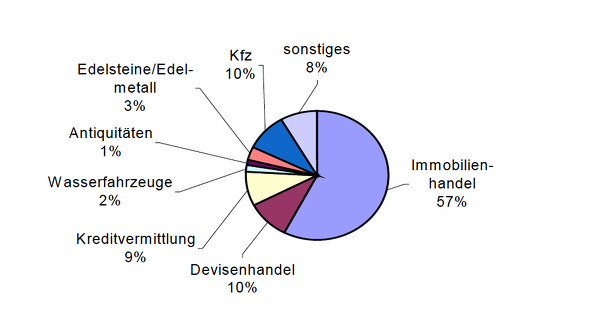
New: Bitcoins, gold bars and the like are missing; source – (Annual Report on Economic Crime 2002, BKA Germany, p. 160).
Transparency note: This article is an AI-assisted translation (artificial intelligence) of the original German-language article published on netz-trends.de on 30 August 2020. In case of doubt, the German original applies.