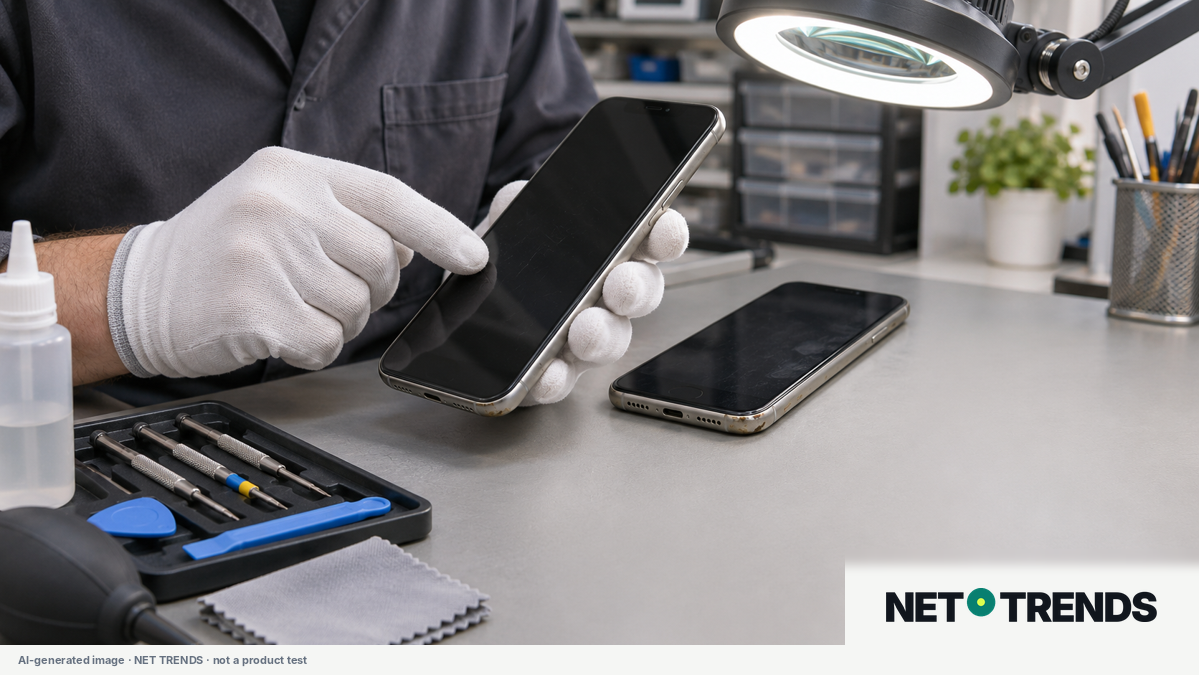
Refurbished smartphones can replace a new purchase. These checks help US buyers compare listings before paying.
Key points
- Identify the seller and its specific condition promises.
- Check battery health, replacement parts, and security update support for the exact model.
- Treat returns, warranty rights, and the final price, before sales tax, as separate questions for US purchases.
A refurbished smartphone does not need to look flawless to be a good purchase. For buyers in the United States, the promised specs, real-world usability, and the actual price gap to a comparable new device matter more than a glossy product photo. A voluntary seller warranty does not replace checking what legal protections already apply.
Net Trends compares decision criteria and traceable cost assumptions here. This is an editorial buying guide with no own product test and no ranking of alleged test winners.
Turning condition grades into concrete promises
The FTC: Warranties consumer guide advises reading the condition description, any inspection process, included accessories, and warranty terms closely before buying a used item. Replaced parts can affect a manufacturer’s warranty. A label like “like new” is not enough on its own for comparison purposes: buyers need that specific seller’s own definition of the grade.
Get open questions answered in writing: what minimum battery capacity is promised? Have the display and charging port been tested? What exactly is included in the package? A clear, specific promise is more useful for the purchase decision than a general quality claim. Decide for yourself which cosmetic wear is acceptable and which features are non-negotiable.
United States: Warranty versus implied legal protections
For purchases from a business seller, the FTC: Warranties guide explains that state law creates implied warranties, including an implied warranty of merchantability, on almost everything sold, even without a written warranty. A seller can sell an item “as is” and waive those implied warranties only where state law allows it and only with clear written notice; otherwise the implied protections still apply. Separately, the federal Magnuson-Moss Warranty Act sets disclosure rules for any written warranty a seller does offer. How long an implied warranty lasts, and exactly how “as is” sales work, varies by state, so buyers should check their own state consumer protection office or an attorney for the specifics where it matters.
Save the order confirmation, the condition description, and the agreed terms. On a marketplace, it should be clear which business is selling and who to contact for a complaint. Do not compare a purchase from a business with a private-party listing on price alone: the legal starting point differs between the two. For a concrete dispute, a state attorney general’s consumer protection office or a consumer-rights attorney is the right next step.
Checking setup and functions
Apple: If you want to buy a preowned iPhone recommends, among other things, checking battery health and the parts and service history on a used iPhone. A device that is still Activation Locked should not be purchased. This guidance is specific to Apple devices; other brands need their own manufacturer instructions.
Before buying, also confirm the promised security update support for the exact model variant. A blanket assumption that applies to all older smartphones would be unreliable. After delivery, phone function, cameras, microphone, speakers, and charging should be tested promptly. Document any difference from the listing’s description. Transfer important data only once the basic functions and setup have been confirmed to work.
Weighing the price gap against likely extra costs
A purely fictional example, not a market price: the refurbished device costs $300, before sales tax, and a comparable new device costs $380, before sales tax. That is an $80 gap. Add a purely assumed $60 for missing accessories or a likely near-term fix, and the advantage shrinks to $20 on paper. These figures are not retailer offers and not repair-shop quotes.
This math shows why a small nominal discount is not an automatic reason to buy. If a battery replacement or the end of useful service life is likely soon, that belongs in the decision. A cheaper device can have cosmetic wear; it should not come with unresolved questions about essential features or unclear contract terms.
Practical checklist
- Record the seller, exact model identifier, and storage size.
- Get battery and condition promises confirmed in writing.
- Read the return policy and defect process before paying.
- Compare the price gap to suitable new hardware, including all extra costs, before sales tax.
Frequently asked questions
Is “refurbished” a single, standardized condition grade?
Rely on the specific promises made and that particular seller’s own definition. A general label does not replace these details.
Should the lowest used price always win?
What matters is what you get for that price, including condition, accessories, usability, and the contract terms.
Sources and status
Research and data status: November 5, 2026. Country edition: United States. All example prices are explicitly fictional assumptions, not researched offers. No own product tests were carried out.
Transparency note: AI-assisted tools were used in researching, structuring and writing this article. The sources used are listed in the article. Publication takes place only after manual editorial approval. Country edition based on an article from Net Trends, researched for the United States.
Share this article