Germany is cutting its federal network-fee subsidy for 2027. In the UK, Ofgem has approved up to £70bn of transmission investment through 2031, which it says will add around £108 to network charges on a typical bill.
Key points
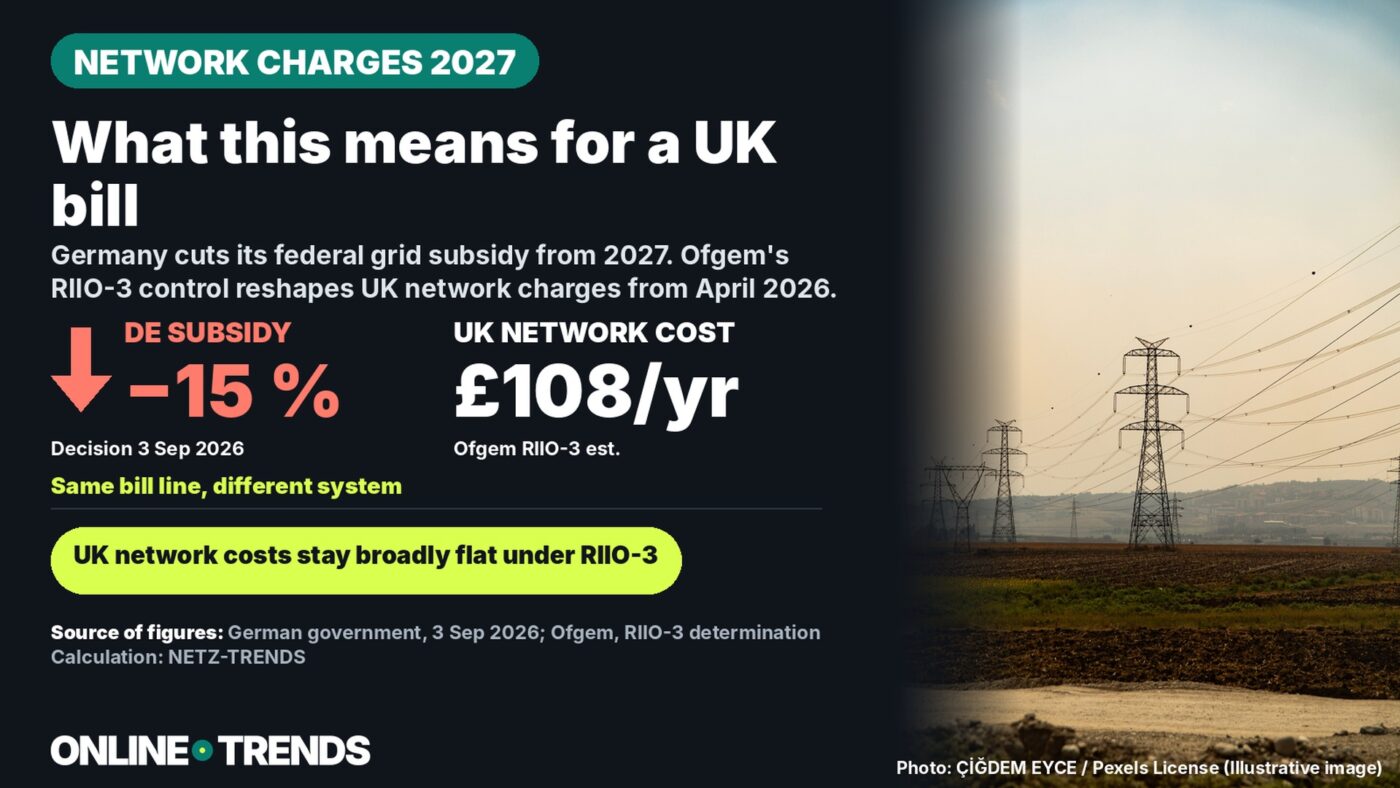
- Germany’s cabinet is cutting its federal subsidy for transmission network fees from €6.5bn (2026) to about €5.525bn a year for 2027–2029, a 15% cut that shrinks the relief on household bills.
- The UK has no equivalent federal subsidy. Ofgem, the energy regulator, sets network charges through multi-year price controls funded entirely through consumer bills.
- Ofgem’s RIIO-3 Final Determinations approve electricity transmission (ET) investment of up to £70bn for 2026–2031, roughly four times the previous period.
- Ofgem estimates network charges rise by £108 across transmission, distribution and gas combined, of which £79 comes directly from the RIIO-3 decisions; after offsetting lower wholesale and constraint costs, the net rise is around £30.
Germany is cutting its federal subsidy for transmission network fees from 2027, shrinking the relief households currently see on their electricity bill. In the UK there is no such subsidy at all – instead, the regulator Ofgem has just approved a much bigger wave of network investment, which it says will itself push bills up.
The two stories sound similar – “network charges on the electricity bill are changing” – but the mechanics are different. Germany’s change is about a government subsidy getting smaller. The UK’s is about the regulator approving more spending on the grid itself, which network operators recover from all customers over several years.
What Germany has decided
Germany’s federal cabinet decided on 3 September 2026 to cut its subsidy for transmission network fees from €6.5bn in 2026 to around €5.525bn a year for 2027 to 2029 – a reduction of €970 million, or about 15%. The subsidy comes from Germany’s Climate and Transformation Fund and, in 2026, cut a typical household’s bill (3,500 kWh a year) by roughly €100. According to a Net Trends model calculation, not a government forecast, the cut could shrink that relief by around €15 a year for the same household – Germany’s parliament still has to approve the 2027 budget that contains the lower figure.
Why the UK has no comparable subsidy
The UK has no federal fund that subsidises electricity network charges the way Germany’s Climate and Transformation Fund does. Instead, network companies recover the full cost of building and running the grid from consumers through regulated charges, under price controls set by Ofgem roughly every five years. There is no government top-up to reduce what appears on the bill; any change in Ofgem’s allowed spending flows straight through to network charges.
Ofgem’s RIIO-3 decision
In December 2025, Ofgem published its RIIO-3 Final Determinations, approving electricity transmission (ET) investment of up to £70bn for the 2026 to 2031 period, up from £18bn in the previous five years – roughly four times as much. Ofgem says the increase is meant to avoid higher costs later, support the Clean Power 2030 plan, and cut constraint costs (paying generators to switch off because the grid can’t carry their power) from about £8bn a year to around £3bn by 2030. ET charges on a typical household bill are projected to rise from £44 in 2025/26 to £104 by 2030/31; Ofgem smoothed part of this by shifting £14 of revenue from the early years of the period into the later ones.
What it means for a typical UK bill
Across transmission, distribution and gas network charges combined, Ofgem’s own estimate is a £108 rise, of which £79 comes directly from the RIIO-3 decisions. Ofgem expects around £80 of that to be offset by lower wholesale and constraint costs, for a net increase of roughly £30 – though the exact effect on any individual bill also depends on the supplier, tariff and region. Unlike in Germany, there is no separate government decision still to come that could change this figure; it follows directly from Ofgem’s already-published determination.
Frequently asked questions
Does the UK have a subsidy for network charges like Germany?
No. UK network charges are funded entirely by consumers through regulated charges; there is no government subsidy that reduces them.
What is RIIO-3?
Ofgem’s five-year price control for electricity and gas network companies covering 2026 to 2031. Its Final Determinations, published in December 2025, approved up to £70bn of transmission investment.
How much will my bill rise because of RIIO-3?
Ofgem’s central estimate is a £108 rise in network charges, offset by about £80 of lower wholesale and constraint costs, for a net rise of around £30 – exact amounts vary by bill.
Is this the same as Germany’s network-fee cut?
No. Germany is reducing a government subsidy, which shrinks existing relief. The UK rise comes from the regulator approving more grid investment, which is new spending recovered from bills.
Have you checked how RIIO-3 affects your own electricity bill? Tell us in the comments.
Sources and status
- Ofgem: RIIO-3 Final Determinations impact assessment.
- German Federal Government: Niedrigere Netzentgelte (in German), 3 September 2026.
- Energiewirtschaftsgesetz: Section 20 EnWG (in German).
Research and data as of: 2 November 2026.
Transparency note: AI-assisted tools were used in researching, structuring and writing this article. The sources used are listed in the article. Publication takes place only after manual editorial approval. Country edition based on a Net Trends article, researched for the UK.
Share this article