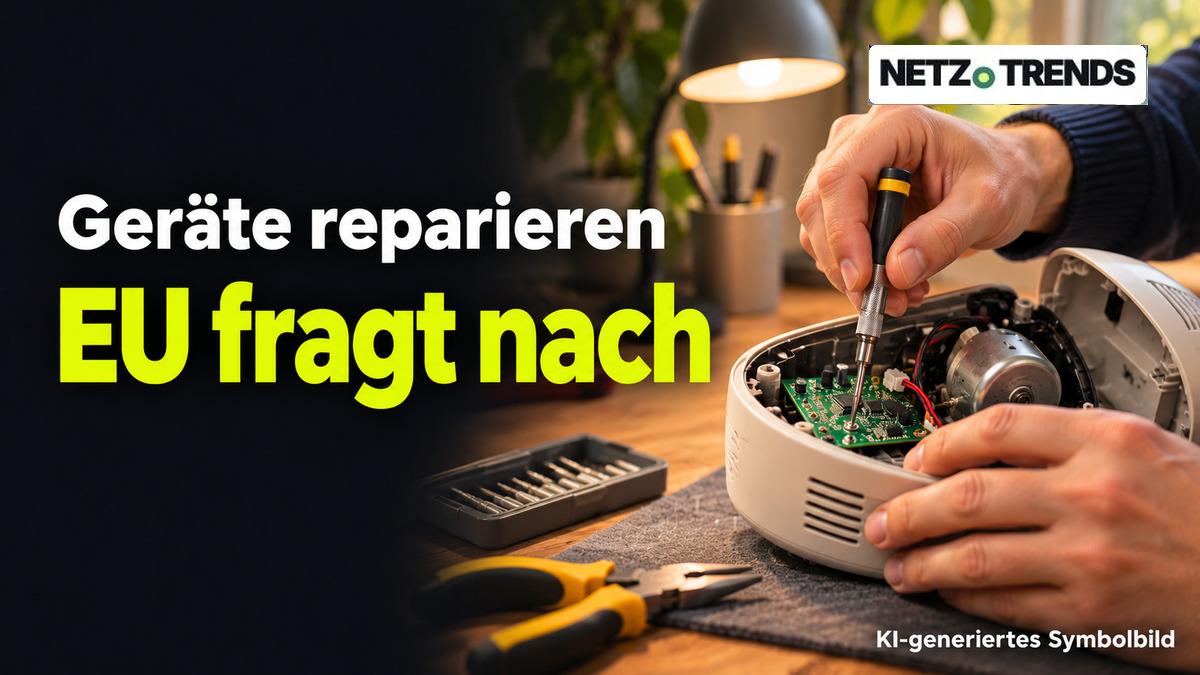
The EU is collecting evidence on hard-to-repair products through February 9, 2027 — in the US, a growing patchwork of state laws already covers repairs.
Key points
- The European Union is asking for evidence on repair problems with consumer electronics, light means of transport and small household appliances sold in the EU, through a consultation open until February 9, 2027.
- No new EU repair rules exist yet; any measure is not expected before the second half of 2027, and would apply to products placed on the EU market, not directly to the US market.
- There is no single federal right-to-repair law in the US. Instead, states have passed their own laws: California (2021), Minnesota (2024), and Colorado and Washington, both effective January 1, 2026.
- Colorado and Oregon go further than most states by banning “parts pairing” — software locks that block independent repairs even with a genuine spare part.
Anyone who had to replace a device early because a spare part was missing, a repair was too expensive, or repair information was unavailable has two very different places to make that count. In Brussels, the European Commission opened a consultation on November 3, 2026, collecting evidence for possible EU repairability rules, running through February 9, 2027. In the US, there is no federal equivalent — but a growing number of states have passed their own right-to-repair laws that already affect American consumers directly.
The EU consultation matters mainly for products placed on the EU market, which means it is most relevant to US manufacturers such as Apple, Dell, HP or Samsung’s US division that also sell in Europe, rather than to US consumers directly. For US readers, the more immediate story is the state-by-state right-to-repair landscape that already determines whether — and how easily — a device can be fixed at home.
What the EU consultation covers
The European Commission opened a public consultation and a so-called “call for evidence” on November 3, 2026. This is an early policymaking stage: the Commission asks citizens, companies and organizations for information before finishing an impact assessment and deciding on a concrete measure. The call explicitly states it does not pre-empt that later decision.
The possible legal basis is a delegated act under the EU Ecodesign for Sustainable Products Regulation (EU) 2024/1781. That regulation creates the framework for product requirements; the consultation itself sets no requirement yet. The Commission’s current timeline points to the impact assessment finishing in the second quarter of 2027, with a possible measure in the second half of 2027 — both can still change, and would apply to products placed on the EU market.
Right to repair in the United States
Unlike the EU, which is weighing a single bloc-wide rule, the US has no federal right-to-repair law. Instead, individual states have passed their own: California’s law has required manufacturers to make parts, tools and documentation available since 2021, with availability windows tied to a product’s price. Minnesota’s Digital Fair Repair Act has covered consumer electronics since 2024. Colorado and Washington both passed digital-electronics right-to-repair laws that take effect January 1, 2026, covering products such as phones, laptops and certain appliances, and New York and Oregon have their own electronics repair laws as well.
Colorado and Oregon stand out for banning “parts pairing” outright — the practice of using software to tie a replacement part to a specific device, so that even a genuine spare part is rejected or loses functionality unless authorized by the manufacturer. Other states’ laws vary in scope and in how strictly they regulate that practice, so the parts and documentation a US consumer can demand still depend heavily on which state they live in.
Which products are affected in the EU
Based on a preparatory study, the European Commission names three broad, provisional product families for its consultation, explicitly not final: consumer electronics (certain audio and video devices, wearables and accessories), light means of transport (certain e-bikes, self-balancing devices and some e-scooters), and small household appliances. Devices with their own existing EU rules, such as smartphones and tablets, are meant to avoid double regulation.
Smartphones and tablets placed on the EU market already carry an A-to-E repairability scale and must meet EU spare-parts and software-update rules since June 20, 2025. Those EU-specific requirements do not apply to devices sold in the US, where the relevant rules remain the state laws described above.
Can Americans submit comments to the EU?
The Commission runs the consultation through the online portal “Ecodesign requirements on product repairability,” open until February 9, 2027, midnight Brussels time. The Commission accepts submissions in any EU official language and does not state a nationality requirement for this consultation, but it gives no assurance about how input from outside the EU is weighted in the later assessment. For most US consumers, state right-to-repair advocacy and state legislators remain the more direct channel to influence repair rules that actually apply to them.
Frequently asked questions
Does the EU consultation create new US repair rules?
No. It is an EU process for products placed on the EU market. It has no legal effect on US law, though it could affect how US manufacturers design and document devices they also sell in Europe.
Is there a federal right-to-repair law in the US?
No. There is no single federal law. Right-to-repair protections come from individual state laws, including California, Minnesota, Colorado, Washington, Oregon and New York, which differ in scope and effective date.
What does “parts pairing” mean, and which states ban it?
Parts pairing uses software to tie a replacement part to a specific device, so an independent repair with a genuine part can be blocked or limited unless the manufacturer authorizes it. Colorado and Oregon ban the practice outright under their state laws.
Your experience counts: which device was unusually hard — or surprisingly easy — to repair, and in which state?
Tell us in the comments.
Sources and status
- European Commission: public consultation on easier-to-repair products, November 3, 2026
- European Commission: “Ecodesign requirements on product repairability” consultation portal
- Regulation (EU) 2024/1781 on ecodesign requirements for sustainable products
- European Commission: product rules for smartphones and tablets, applicable since June 20, 2025
- Overview of US state right-to-repair laws (California, Colorado, Washington, Minnesota, New York, Oregon)
Research and data as of: November 15, 2026.
Transparency note: AI-assisted tools were used in researching, structuring and writing this article. The sources used are listed in the article. Publication takes place only after manual editorial approval.
Share this article

Comment Tell us what you think →