
The U.S. launches a frontal attack on Europe – What the 2025 National Security Strategy really says about the EU, Germany and Europe’s political trajectory
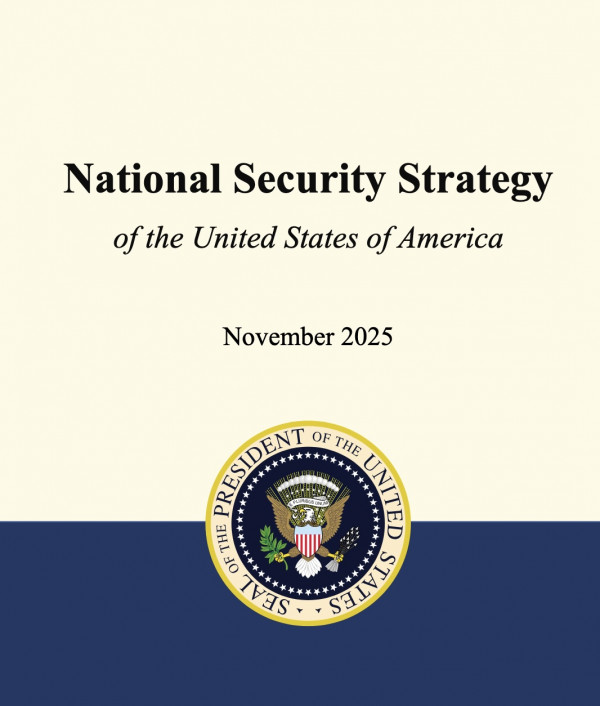
The National Security Strategy of the United States of America (November 2025), published at Whitehous.gov, is far more than a conventional foreign-policy document.


It is a political manifesto in which the administration of President Donald Trump offers a radical reassessment of Europe, the European Union, and the political landscape of Germany, Austria, Switzerland and the entire continent.
The document uses unusually direct language and levels accusations that are unprecedented in their severity: censorship, suppression of political opposition, erosion of sovereignty, strategic economic mismanagement, a profound loss of identity, and even the looming threat of “civilizational erasure.”
At the same time, the strategy contains political signals addressed to so-called “patriotic parties” in Europe and outlines how the U.S. might intervene—diplomatically, economically, and indirectly politically—in Europe’s trajectory. For Europe, the document reads not merely as an analysis, but as a challenge and a fundamental realignment in transatlantic power dynamics.
Europe at the brink of civilizational collapse
The most shocking statement appears on page 25, paragraph 3:
“But this economic decline is eclipsed by the real and more stark prospect of civilizational erasure.”
(p. 25, para. 3)
Washington depicts a Europe that is not only economically weakened but has lost its cultural foundations. The term “civilizational erasure” is unprecedented in any official U.S. strategic document.
The EU as a threat to political liberty and national sovereignty
A particularly explosive passage confronts the European Union directly. On page 25, paragraph 4, the document states:
“The larger issues facing Europe include activities of the European Union and other transnational bodies that undermine political liberty and sovereignty.”
This portrays Brussels as an institution that—according to the U.S.—damages democratic rights and weakens national self-determination.
Accusations of censorship and suppression of political opposition
In the same paragraph, Washington asserts:
“censorship of free speech”
“suppression of political opposition”
On page 26, paragraph 2, the accusation escalates:
“many of which trample on basic principles of democracy to suppress opposition”
(p. 26, para. 2)
The U.S. describes Europe as a political space where dissenting views are systematically marginalized.
Germany as a cautionary tale of economic mismanagement
On page 26, paragraph 1, Germany is explicitly named:
“especially Germany’s external dependencies”
“German chemical companies are building some of the world’s largest processing plants in China, using Russian gas they cannot obtain at home.”
This frames Germany as an example of strategic missteps that jeopardize European stability.
European governments acting against the will of their populations
On page 26, paragraph 2, the U.S. argues:
“A large European majority wants peace, yet that desire is not translated into policy, in large measure because of those governments’ subversion of democratic processes.”
This describes Europe as a region where democratic representation is eroding.
Europe losing its identity and confidence
On page 25, paragraph 4, the document states:
“loss of national identities and self-confidence”
And on page 25, paragraph 6:
“Europe must regain its civilizational self-confidence.”
Washington thus portrays Europe as culturally depleted and insecure.
Signals to Europe’s “patriotic parties”
On page 26, paragraph 3, the U.S. writes:
“America encourages its political allies in Europe to promote this revival of spirit.”
The phrase “political allies” is widely interpreted in Europe as an indication that the U.S. is offering political encouragement to parties advocating national sovereignty, reduced EU centralization, and resistance to censorship.
The most explosive line: The U.S. wants to “correct” Europe’s trajectory
On page 27, paragraph 1, the strategy states:
“Our goal should be to help Europe correct its current trajectory.”
This suggests a role that extends beyond diplomacy—towards political realignment.
How the U.S. allegedly intends to influence Europe
When read as a whole, the document presents a U.S. view of Europe as politically, culturally, and economically misdirected. Through support for “patriotic parties,” economic leverage, and diplomatic pressure, Washington signals an intention to shape Europe’s future direction.
Comment
NETZ-TRENDS.de has nothing to add to this, otherwise we too will face criminal proceedings for alleged incitement to hatred.

JOIN THE ILLUMINATI666 BROTHERHOOD – Betrugswarnung: Scam-Kommentar mit illumnatib53@gmail.com und +234 901 788 7682 auf NETZ-TRENDS.de
USA greifen Europa frontal an: Die National Security Strategy 2025 wirft EU, Deutschland und Europas Politikern Zensur, Unterdrückung, Identitätsverlust und geopolitisches Versagen vor

Glücksspiel in Deutschland, Österreich und der Schweiz: Wachstum, Kontrolle und Verbraucherschutz
Ausverkauf einer Nation: Wie grün-links-fanatische Ideologie Deutschland zerstört – und China und die USA profitieren / Media Markt und Saturn fallen – doch sie sind nur der Anfang
Beliebteste News
Chinas neuer Fünfjahresplan: Technologie als Schlüssel zur strategischen Autonomie

»Ab-in-den-Urlaub.de« – der Crash des Internet-Imperiums Unister / Aufwühlende MDR-Podcast Serie
IMMOCOM als Arbeitgeber: Seit Jahren katastrophale Bewertungen – und schweigendes Management Michael Rücker und Ivette Wagner, Leipzig, Dresden
OBI MachbarMacher 2026: 15-qm-Zimmer tapezieren und streichen – Malerofferte über 3.191 Euro vom Kunden abgelehnt - worauf musst Du achten bei der Malerauswahl? Was ist marktüblich und was ist Handwerker-Abzocke?